

Teegatha’Oh Zheh is a Gwich’in phrase, gifted to the organization by an elder, that translates directly to: “Coming home over the same trail which you left.”
Our Story
History & Evolution
Teegatha’Oh Zheh (TOZ) is a well-established organization dedicated to providing day services and support for adults with intellectual disabilities in Whitehorse, Yukon.
TOZ was founded in 1989 to provide support services for Yukon residents returning home after many years in large, southern institutions. The core philosophy of the organization was to support individuals in their own homes, within the community.
- 1989 TOZ established to support Yukon residents returning home after years in large southern institutions.
- 1992 Expansion to provide additional community-based residences.
- 1994 Introduction of day programming and employment support services.
- 2021 Deepened the mission to include advocacy and inclusion through the arts, with the launch of the Advocacy Through Arts Initiative and the Teegatha’Oh Zheh Progressive Art Studio (TOZPAS).
- 2023–2028 New strategic plan prioritizing embedding person-centred thinking into all aspects of the organization.
Strategic Direction
Teegatha’Oh Zheh’s 2023–2028 Strategic Directions provide a framework for the organization’s growth, learning, and future direction. Grounded in person-centred practices, community collaboration, and sustainable development, these strategic directions build on TOZ’s strengths while continuing to evolve through ongoing learning and engagement with the people we support, their families, and the broader community.
-
Person-Centred Culture
Cultivate Organisational Person-Centred Practices, Competencies, and Culture.
-
Community Engagement
Increase Community Engagement through Collaboration and Supporting Individuals to have Valued Roles.
-
Reconciliation & Learning
Listen & Learn how TOZ can Support Reconciliation. Build Relationships and Deepen Understanding of Yukon First Nations Traditions, Culture, and Values.
-
Outcomes & Reach
Increase Positive Outcomes and Reach of Supports and Services for Individuals and Families.
-
Sustainable Capacity
Build Sustainable Organisational Capacity.
Person-Centred Organization
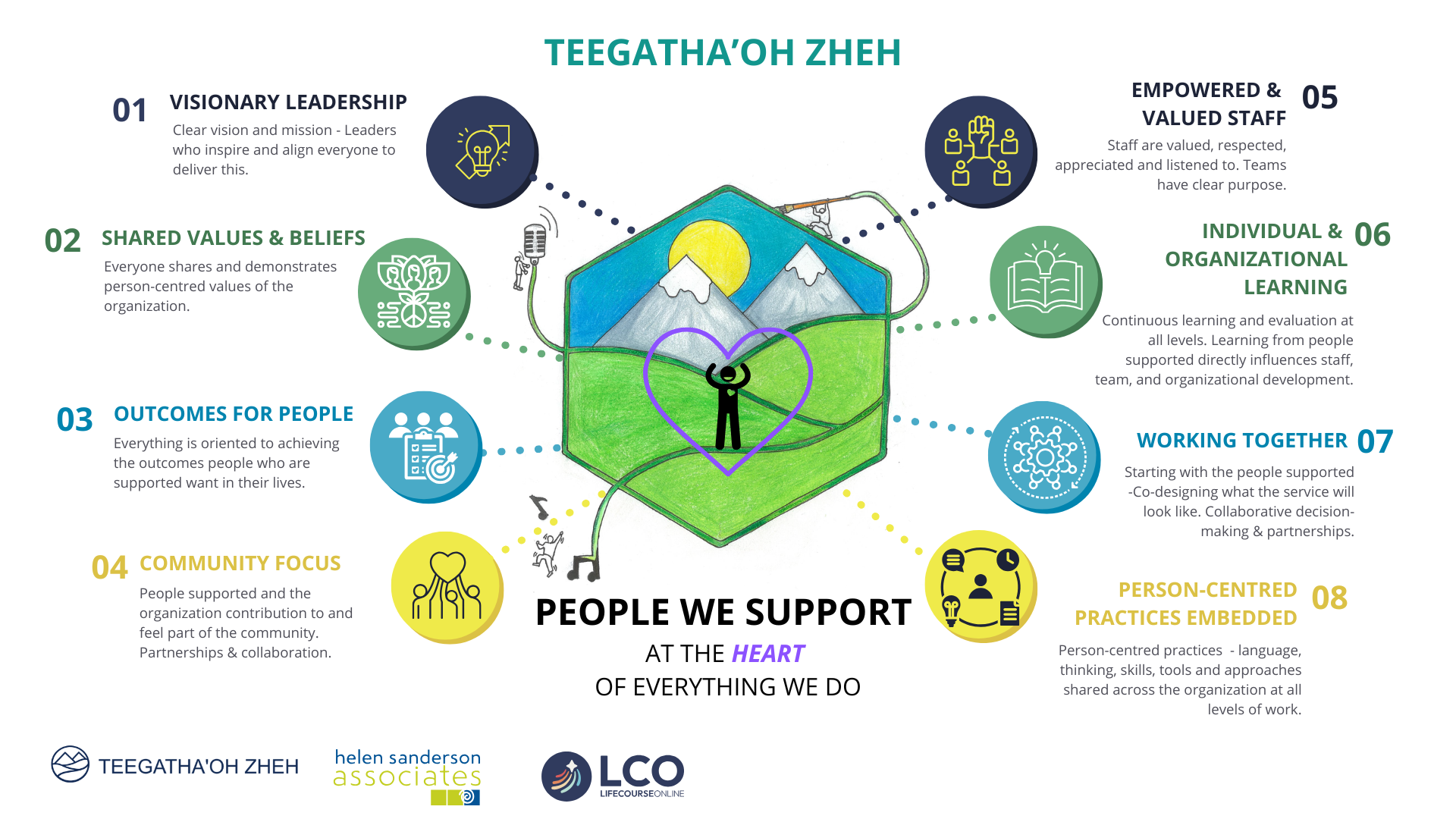
Why a Person-Centred Transformation is Needed
Historically, developmental services grouped individuals into congregate settings, limiting autonomy, choice, and meaningful participation in the community.
A shift is required from service-based models towards recognising individuals as full citizens with rights, dignity, and self-determination.
The Strategic Shift to Person-Centred Thinking
TOZ’s transformation will require embedding person-centred values at all levels of the organization, including:
- Developing staff competencies to support choice, autonomy, and meaningful inclusion.
- Shifting policies and service delivery to prioritise individual goals and community participation.
- Strengthening partnerships with families and community stakeholders to co-design supports.
The Path Forward
- The person-centred transformation at TOZ is not simply a policy change — it is a cultural shift that places individuals at the heart of every decision.
- TOZ is committed to becoming a model organization for modern, inclusive, and responsive disability support services.
- By embedding person-centred principles across all aspects of the organization, TOZ will champion a future where individuals with disabilities are recognised, empowered, and supported as full citizens in their communities.
Guiding Principles
-
Sustainability
We commit to setting goals and taking action that is impactful and sustainable.
-
Dignity & Full Citizenship
We believe in the dignity and rights of every human being and their inherent right to full and inclusive citizenship.
-
Learning for the Uniqueness of the Individual
We believe people thrive when opportunities fit their individual strengths, needs, and interests.
-
Partnerships
We promote and welcome community partnerships to further enrich our community.
-
Leadership & Excellence
We believe in the importance of being leadership in our work and modelling authentic belonging within our community.
Dignity of Risk
A life of dignity and meaning involves risk. In pursuing work, relationships, recreation, and personal aspirations, each of us steps into the unknown, accepting the possibility of failure, rejection, and uncertainty. These experiences, both successes and setbacks, play an essential role in shaping confidence, independence, and personal growth.
For individuals with intellectual and developmental disabilities, opportunities to take risks are often limited. Out of care and good intentions, those who support them may try to eliminate potential dangers or prevent the possibility of failure. While meant to protect, this approach can unintentionally remove valuable opportunities for learning, exploration, and self-discovery.
When risk is removed entirely, individuals may be denied the experiences that allow people to test their abilities, build resilience, and experience the satisfaction that comes from overcoming challenges. Growth occurs when people are given the space to try new things, learn from experience, and develop through meaningful participation in the world around them.
Dignity of risk does not mean encouraging unsafe behaviour or exposing individuals to harm. Instead, it recognises that everyone has the right to make choices, take reasonable risks, and learn from the outcomes of those choices. With thoughtful support and guidance, individuals can explore new opportunities, discover their capabilities, and pursue goals that bring meaning and fulfilment to their lives.
By embracing dignity of risk, we affirm that people with intellectual and developmental disabilities deserve the same opportunities for independence, personal growth, and participation in community life as anyone else.